Mo logo [home] [lexicon] [problems] [tests] [courses] [auxiliaries] [notes] [staff] german flag

Mathematics-Online course: Linear Algebra - Matrices - Linear Maps

The Matrix of a Linear Map


[previous page] [next page] [table of contents][page overview]

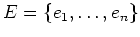
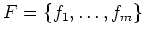
A linear map $ \alpha: V \longmapsto W$ between two $ K$-vector spaces with bases $ E = \{e_1,\dots,e_n\}$ and $ F = \{f_1,\dots,f_m\}$ is uniquely determined by the images of the basis vectors

$\displaystyle \alpha(e_j) =: a_{1,j} f_1 + \dots + a_{m,j} f_m\, .
$

We obtain the matrix representation

$\displaystyle w_F = Av_E
\longleftrightarrow
w_i = \sum_{i=1}^n a_{i,j} v_j,\quad i=1,\ldots,m\,
,
$

where $ v_j$ and $ w_i$ denote the coordinates relative to the bases $ E$ and $ F$, resp.
A linear map $ \alpha$ is uniquely determined by its images of the basis vecors. This follows directly from the conditions of linearity:
$\displaystyle w = \alpha(v)$ $\displaystyle =$ $\displaystyle \alpha(\sum_j v_j e_j)$  
  $\displaystyle =$ $\displaystyle \sum_j v_j \alpha(e_j)$  
  $\displaystyle =$ $\displaystyle \sum_j \sum_i v_j a_{i,j} f_i\,
.$  

Writing

$\displaystyle w = \sum_i w_i f_i
$

and comparing the coordinates of the basis $ w_i$ we also find the asserted matrix representation.
(Authors: Burkhardt/Höllig/Hörner)

Below you see some linear mappings of the plane

$\displaystyle q:\ \mathbb{R}^2 \to \mathbb{R}^2\,,
$

which are determined by the images of the unit vectors (bold)

$\displaystyle e_1 = (1,0),\quad e_2 = (0,1)\,
.
$

\includegraphics[width=.8\linewidth]{b_transformationen_bild_en}

You can directly read off the matrix representation $ Q$ with respect to the canonical basis $ \{e_1,e_2\}$:

   Dilatation: $\displaystyle \left(\begin{array}{cc}
r & 0 \\ 0 & s
\end{array}
\right)
\,,$   Rotation: \begin{displaymath}
\displaystyle \left(
\begin{array}{cc}
\cos \vartheta & -...
...ray}{cc}
1 & \cot \alpha \\ 0 & 1
\end{array}
\right)
\,.
\end{displaymath}

The columns of the matrices contain the respective coordinates of the vectors $ q(e_i)$, $ i=1,2$.
(Authors: Burkhardt/Höllig/Hörner)

A linear function

$\displaystyle x\mapsto p(x) = a_0 + a_1 x
$

is determined by its values at the points $ x=0,1$. The mapping $ p\mapsto (p(0),p(1))$ is linear and can be represented with respect to the monomial basis,

$\displaystyle (a_0,a_1) = (1,0),\,(0,1)
,
$

by matrix

$\displaystyle \left(\begin{array}{cc}
1 & 0 \\ 1 & 1
\end{array}\right)\,.
$

Using the basis

$\displaystyle p_1(x) = 1-x,\,p_2(x) = x
$

we obtain the matrix

$\displaystyle \left(\begin{array}{cc}
p_1(0) & p_2(1) \\ p_1(0) & p_2(1)
\end...
...ay}\right)
=
\left(\begin{array}{cc}
1 & 0 \\ 0 & 1
\end{array}\right)\,.
$

In general, the evaluation of a given polynomial

$\displaystyle p(x) = a_0 + a_1 x + \cdots + a_n x^n
$

of degree $ \le n$ at $ m$ points $ x=x_1,\ldots,x_m$ is described by the Vandermonde matrix

$\displaystyle V=\left(\begin{array}{cccc}
x_1^0 & x_1^1 & \cdots & x_1^n \\
...
...rray}\right)=
V\left(\begin{array}{c}a_0\\ \vdots\\ a_n\end{array}\right)\,.
$

(Authors: Burkhardt/Höllig/Hörner)

  automatically generated 4/21/2005